Mad Cow Disease in the USA: Understand Prions, Part II
Prions have been known by many scientists for many years. They are believed to cause disease by triggering an immune response when they enter an animal or human body.
In 1997, Stanley Prusiner, MD, won the Nobel Prize for his discovery of prions, an acronym for proteinaceous infectious particles. Prions are associated with a variety of slow-acting and fatal diseases in animals and humans. Prions are not a virus or bacteria. Prions are proteins that are thought to cause disease when they become twisted or change shape.
The diseases associated with prions have been known for over 50 years. The prion may well have been discovered more than 150 years ago, before Prusiner’s work, and re-discovered repeatedly by different researchers who gave the molecule a different name each time it was discovered.
For example, in the 1800s, a French physician and professor of biochemistry named Antoine Bechamp discovered tiny particles he named microzymas. Microzymas could change shape depending on the body’s immune system.
Another scientist-inventor, Royal Rife, also observed what Bechamp had discovered, tiny bodies that could change shape. Bacteria, for example, could become a virus or a fungus.
Prions are mysterious. They cause mad cow disease. Yet they are not infectious agents. They are not alive. Consequently, they cannot be killed. They do not reproduce. They cannot be destroyed by burning. They are bits of protein, parts of molecules. Originally, because they are misshapen, it was believed that prions caused other prions to become misshapen too. But this idea has been disproved.
A Medical Hypothesis report in 1997 makes a case for prions as triggers for an auto-immune response. Entering the body through inhalation or injection, prions, which are bits of protein similar to other protein present in any body, awaken the immune response. Because prions resemble body tissue, the immune system response targets for destruction anything that resembles bits of protein. Antibodies developed by the immune system to attack prions will also attack cells with disastrous results. An example of auto-immune disease is multiple sclerosis, MS. In MS the immune system attacks the myelin sheath, the insulating cover of nerves. The symptoms are great pain and deranged limb movement, or mental impairment and visual loss.
Dr Eddy Bettermann MD focus on Biological Medicine (Biologische Medizin) #Biological #Medicine #videos http://bit.ly/2LF3Ro3, Darkfield Microscopy (Dunkelfeld Mikroskopie), Orthomolecular Medicine (Orthomolekulare Medizin), Ayurvedic Medicine (Ayurveda), Psychosomatic Medicine (Psychosomatische Medizin), raw food (Rohkost), fasting (Fasten):
Our primary integrative medicine goal is the maintenance of your health and wellness, and we are committed to safe and effective healthcare.
Our specialties include online integrative medicine education by alternative doctor: food and allergy management through the use of Integrative medical therapy, Environmental Medicine, General Family Medicine, Ayurveda, Panchakarma, Chronic Fatigue, ADHD, autism, Fibromyalgia, Yeast/Fungus related diseases – Candidacies, mercury dental replacement and detoxification, Natural Thyroid Replacement, Weight loss, Lyme Disease, Irritable Bowel Disease, Attention Deficit Disorder, Pervasive Developmental Disorders, Multiple Chemical Sensitivities, Addiction related programs, Intestinal Dysbiosis, as well as trigger point therapy using Neural Therapy.
Dr. Eddy Bettermann MD, physician from Germany, consultant and teacher in biological medicine, especially dark field microscopy known as Live Blood Analysis in Thailand, Malaysia, Hong Kong, Singapore and the Philippines. But he lecture also in the USA, Canada and the U.A.E. He speaks english and german.
https://dreddymd.com/2017/01/17/the-interactive-live-blood-cd-and-the-certified-training-live-blood-analysis-online-course/
https://dreddymd.com/courses/
https://dreddymd.com/2017/01/17/live-blood-microscopy-analysis-darkfield-course/
“Let thy Food be thy Medicine and thy Medicine be thy Food.” — Hippocrates
Physician Member of the Medical Board at AOX Singapore,
Medical Doctor at Nurse Mobile Clinic and
Physician at DrEddy Clinic
Our Mission:
The mission of the Integrative Medicine is to search for the most effective treatments for patients by combining both conventional and alternative approaches that address all aspects of health and wellness – biological, psychological, social and spiritual. Biological Medicine is a big part of my work and so is Dark field Microscopy, what I use in my daily practice and what I teach more then 15 years in Asia and around the world: Live Blood Analysis in dark field based on Haematology.
We utilize Live blood analysis since 2004, conventional as well as specialty laboratories for a thorough diagnostic work up of the disease in question. Our integrative medicine treatment regimens are especially unique and are tailored specifically to the individual needs of each patient.
Our Mission: don’t harm, prevent, use food as medicine
We are a reliable partner for integrative medicine in Medical Spa & Clinic Development and integrative medicine Education Training for alternative doctors – we bring different holistic approaches, like Integrative Medicine, Traditional Chinese Medicine and Ayurveda Medicine together. On your request we offer our service in your place as well.
Heavy metal poisoning
Heavy metal poisoning is much more common than most people realize, and if you’re thinking that it doesn’t apply to you because you haven’t been exposed to any, think again. If you’ve eaten fish regularly, had amalgam fillings, received vaccinations, drank contaminated water, or done industrial or agricultural work or pharmaceutical manufacturing, there’s a good chance that you have a fair amount of toxic metals in your system..
We are here to help and to educate!
Wishing your health and happiness
Dr Eddy Bettermann MD
We are affiliated The Wellness Company https://bit.ly/3V726zc
The Wellness Company Coupon for membership, supplements, doctor appointment, online consultation https://bit.ly/3V5NsIy
DrEddyClinic is affiliate of Amazon and get commission for the products, which we recommend https://www.amazon.com/shop/dreddyclinic , same as GlobalHealing https://dreddymd.com/shop/supplements/
View all posts by dreddymd
One thought on “Mad Cow Disease in the USA: Understand Prions, Part II”
Prions are infectious agents composed of small proteins that can cause transmissible spongiform encephalopathies in humans and animals. These diseases affect the brain, causing it to develop holes or become “spongy” in appearance under a microscope. The prion protein (PrP) is misfolded into an abnormal form called PrP^Sc, which can trigger normal cellular prions (PrP^C) to adopt the same incorrect conformation and aggregate. This process leads to the accumulation of these aggregates in brain tissue, ultimately causing neuronal degeneration and death.
Some examples of diseases caused by prions include:
1. Creutzfeldt-Jakob Disease (CJD): A rare human neurodegenerative disease that affects the central nervous system.
2. Kuru: A transmissible spongiform encephalopathy observed in the Fore people of Papua New Guinea, which was likely spread through cannibalistic rituals.
3. Bovine Spongiform Encephalopathy (BSE), also known as “mad cow disease”: A prion disease that affects cattle and has been linked to a human form called variant Creutzfeldt-Jakob Disease (vCJD).
4. Scrapie: A transmissible spongiform encephalopathy in sheep and goats, which is the most common prion disease found in animals.
There is currently no cure for prion diseases, as they are resistant to conventional treatments like antibiotics or antiviral drugs. Prevention strategies focus on avoiding exposure to infected tissues and implementing strict regulations regarding animal feed and human consumption of meat from affected animals.

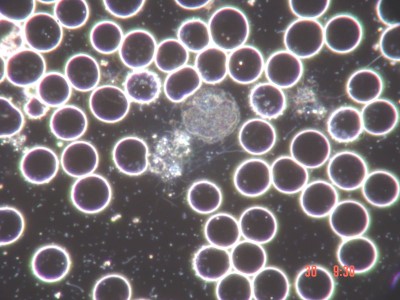
 Prions have been known by many scientists for many years. They are believed to cause disease by triggering an immune response when they enter an animal or human body.


 Dr. Eddy Bettermann MD
Prions are infectious agents composed of small proteins that can cause transmissible spongiform encephalopathies in humans and animals. These diseases affect the brain, causing it to develop holes or become “spongy” in appearance under a microscope. The prion protein (PrP) is misfolded into an abnormal form called PrP^Sc, which can trigger normal cellular prions (PrP^C) to adopt the same incorrect conformation and aggregate. This process leads to the accumulation of these aggregates in brain tissue, ultimately causing neuronal degeneration and death.
Some examples of diseases caused by prions include:
1. Creutzfeldt-Jakob Disease (CJD): A rare human neurodegenerative disease that affects the central nervous system.
2. Kuru: A transmissible spongiform encephalopathy observed in the Fore people of Papua New Guinea, which was likely spread through cannibalistic rituals.
3. Bovine Spongiform Encephalopathy (BSE), also known as “mad cow disease”: A prion disease that affects cattle and has been linked to a human form called variant Creutzfeldt-Jakob Disease (vCJD).
4. Scrapie: A transmissible spongiform encephalopathy in sheep and goats, which is the most common prion disease found in animals.
There is currently no cure for prion diseases, as they are resistant to conventional treatments like antibiotics or antiviral drugs. Prevention strategies focus on avoiding exposure to infected tissues and implementing strict regulations regarding animal feed and human consumption of meat from affected animals.
LikeLike