Selenium (Se) is a trace mineral that supports your body in many ways. It contributes to reproductive health,[1] thyroid health,[2] and helps reduce DNA damage due to its antioxidant nature in certain forms.[3]Nuts, seeds, beans, and some vegetables are rich in selenium, but you can also take this essential micronutrient supplementally when your diet falls short.
Selenium is named for the Greek goddess of the moon, “Selene.” A non-metallic, group 16 element, selenium is a member of the oxygen family, which includes sulfur and tellurium.
In addition to being an essential nutrient in the body, selenium is a semiconductor, which means it can transfer electrical energy, but not quite as well as conductors, like metals. As a result of that property, it used in modern electronics.
What Does Selenium Do in the Body?
Several enzymes in the body — selenoproteins — require selenium to function properly.[4] Selenoproteins are particularly important for thyroid gland function, DNA repair, fertility, and sexual reproduction. Selenoproteins comprise part of the enzymes glutathione peroxidase and thioredoxin reductase, which help DNA replication and cell protection. These two enzymes not only protect DNA against oxidative damage caused by free radicals but also repair damage that does occur. Essentially this means that selenium promotes graceful aging.
Another selenium-containing enzyme called iodothyronine deiodinase converts the thyroid hormone thyroxine (T4) to the more actively used triiodothyronine (T3) by removing one iodine ion. In this way, you must have selenium for your thyroid to properly function.[5]
The Benefits of Selenium
Selenium fulfills several important roles in the body. One of its most well-known benefits is for thyroid support, but selenium has several less-known benefits. It supports metabolic function, prevents DNA damage, plays a role in heart health, and even resists harmful organisms on your skin and in your body, boosting your immunity. Below are the most important benefits this mineral provides to your health:
Acts as an Antioxidant
Oxidative stress causes wear and tear on our bodies that becomes more and more evident as we age. Antioxidants neutralize free radicals, counteracting the oxidative stress and cell damage they otherwise cause.[6] Along with vitamins C and E, selenium is one of the most important antioxidants for the human body.[7] Selenium’s antioxidant properties typically come when it is in selenoproteins, rather than as a selenium compound (S2).
Boosts Thyroid Health
Selenium is critical for the endocrine system, especially the thyroid gland, which affects metabolism, as well as heart, brain, and muscle function. Selenium helps convert T4 to T3 by removing one iodine molecule through the selenium-containing iodothyronine deiodinase molecule. Thus, selenium is critical for proper functioning of your endocrine system and thyroid gland.[5]
Resists Harmful Organisms
Selenium has antifungal properties.[8] On the skin, selenium — usually in the form of selenium sulfide (SeS2) — resists the growth of harmful fungus species.[9] It also has been shown to resist the cytotoxic (cell-killing) action of aflatoxins present in certain fungus species. This is one reason why selenium sulfide is an active ingredient in certain dandruff and anti-itch shampoos, conditioners, lotions, and creams. Within your body, selenium also resists harmful organisms, and in that way boosts your immune response to invading pathogens.[10, 11]
Supports Lung Health
Scientific studies found that when asthmatics took selenium supplements, they experienced fewer asthma symptoms than those taking a placebo.[12] People with asthma may have lower selenium levels in their blood, though it is not clear if this is a cause of asthma or an effect of the condition.[12]
Helps Fertility & Supports Healthy Pregnancy
Men and women alike who are actively trying to conceive a child should ensure they receive enough selenium in their diets or take supplements. Selenium supplementation strongly increased sperm motility in fully half of the subfertile men in a study conducted in Scotland.[13] Selenium also plays an important role in human conception and pregnancy, and a lack can lead to infertility. Pregnant women with adequate selenium had higher birth weight infants compared with those who had lower blood serum levels of this mineral.[14].
Supports Heart Health
Studies have found that selenium supports heart health by improving blood flow, fights against redness, swelling, and irritation in the body. Studies have linked selenium concentrations in the blood with better cardiovascular health,[15] although the evidence is still accumulating.
May Improve Longevity
Studies link adequate selenium levels to longevity and anti-aging benefits. The main mechanism for this is selenium’s role as an antioxidant, fighting against cell damage, and it even plays a role in defending against serious and even fatal health conditions.[16] Selenium may also help reduce cognitive decline — the reduction in brain function — that happens with age, also due to its antioxidant effects.[17]
How Much Selenium Do You Need?
At Global Healing Center, we measure wellness by the body’s ability to carry out its natural functions and processes. The most important thing you can do to support your health is to sufficiently nourish your body. That means consuming the right nutrients — mainly from the foods you eat. The National Institute of Health’s Office of Dietary Supplements created this Recommended Dietary Allowances (RDA) chart to help consumers understand the daily intake levels for selenium that you should strive for.[18] Adults nineteen and above should take 55 micrograms (mcg) daily. Pregnant and lactating women should increase their intake levels.
Life Stage
RDA (in micrograms)
Birth-6 months
15 mcg
7-12 months
20 mcg
1-3 years
20 mcg
4-8 years
30 mcg
9-13 years
40 mcg
14+ years
55 mcg
Pregnancy
60 mcg
Lactation
70 mcg
If you miss a dose of your daily supplement, do not double up your dose the next day.
Selenium Deficiency
Most Americans receive adequate amounts of selenium from their diet, but there are regional differences in intake levels; this happens because its levels vary in soils in different regions, which in turn affects its concentration in vegetables.[18] According to the National Institutes of Health, selenium intake is higher in people living in the Midwestern and Western U.S., and lower in the South and Northeast. Additionally, intake varies by race, with Caucasians having higher intake levels than African Americans.[18]
If you don’t get enough selenium in your diet, you may develop a selenium deficiency. A deficiency is rare, but can occur more frequently in people with autoimmune conditions including HIV and Crohn’s Disease.
Signs you’re experiencing a selenium deficiency include:[18, 19]
Taking a selenium supplement can provide a regular, consistent serving of selenium that you need to prevent deficiencies and ensure your body is functioning properly.
Foods High in Selenium
You can readily find selenium in many nutritious foods including nuts, beans, and seeds. Selenium is abundant in plants and soil, and as a result, there are many selenium-rich vegetables you can eat. Meat can also serve as a source of dietary selenium, but I recommend eating a plant-based diet for optimal health. Try the following foods for your best boost of this vital mineral.
There are many other foods that contain selenium but are not a natural source. Some of the most common foods, like bread, are made with flour or other ingredients fortified with selenium and other vitamins and minerals — sort of like adding a multivitamin to the recipe. Although this sounds like a good way to help round out the nutritional profile of the food in question, the fortified nutrients are typically synthetic, and the body absorbs nutrients best from the foods it naturally occurs in. Learn more about these foods and others in the 7 Best Vegetarian Foods for Selenium.
Forms of Selenium
There are several types of selenium in supplements and even more forms that are found in nature in plants and animals. The most common selenium forms you will find on the shelf include both inorganic sodium selenite and sodium selenate, and carbon-based selenium forms (organic) selenomethionine or selenium-enriched yeast.
Selenomethionine: Organic selenomethionine is naturally formed in many plants and is the variety found naturally in selenium-rich foods like Brazil nuts, legumes, grains, and fish.
Selenocysteine: Organic selenocysteine and its close chemical cousin methylselenocysteine are selenium-containing amino acids that the body uses for protein synthesis.
Selenate: Inorganic selenate is a form found naturally in shellfish and vegetables of the Brassica family (cruciferous vegetables like broccoli, cabbage, and Brussels sprouts) and the Allium family (onions, garlic), as well as radishes.[20]Selenite: This inorganic form is often used in supplements and pet foods. Studies have found it has strong antioxidant properties in this form. It is present in garlic (along with selenomethionine).
Selenium-enriched yeast: This form is commonly sold in supplements. The yeast (a fungus) is grown on a selenium selenite medium, but supplements with selenium-enriched yeast contain mainly selenomethionine, with trace amounts of methylselenocysteine and gamma-glutamyl Se-methylselenocysteine.
The bioavailability of the types varies, but the body absorbs selenomethionine and selenate best, at around 90 percent. In contrast, only 50 percent of selenite gets absorbed.[18, 21]
Selenium Side Effects
Selenium itself does not have side effects when taken in the recommended doses but can be toxic at higher amounts. Ingesting too much can result in an overdose or selenium toxicity.[22] which has the following symptoms:
While this is a rare situation, if you suspect you may have taken too much selenium, contact your healthcare provider immediately. As always, keep vitamins and all supplements out of reach of children.
What’s the Best Selenium Supplement
Most people should aim to get their daily dose of vitamins and minerals by eating a mix of fruits, vegetables, seeds, and oils, but where your diet falls short, supplements can help. Most people get enough selenium from their diet, but if you feel you may be at risk of a selenium deficiency or just do not get enough of selenium-rich foods, you can take a supplement. Choosing the right selenium supplement, you need to know two things: the source of the selenium and its concentration. Selenium supplements can be made synthetically or sourced from natural ingredients. The selenium concentration indicates how much selenium each serving provides.
I recommend our plant-based Global Healing Center Selenium supplement. Made from high-quality, certified-organic mustard seed, it’s GMO-free, vegan, and gluten-free. It provides naturally-occurring selenomethionine which has the highest bioavailability of the organic (carbon-based) selenium forms.
See more about Selenium Medicine
Points to Remember
Your body uses selenium in several enzymes critical to your body’s healthy functioning, including ones involved in producing thyroid hormones and protecting cells and DNA from oxidative damage, and promoting fertility. Your body does not produce this essential nutrient so you must get it from selenium-containing foods or supplements. Plant-based foods rich in selenium include beans and other legumes, cereal grains, seeds, nuts, onions, and cruciferous vegetables. You can also find selenium in fish, shellfish, and dairy. The best form of selenium to buy is selenomethionine, a naturally-occurring organic form that the body absorbs better than other forms.
References (22)
Dr Eddy Bettermann MD focus on Biological Medicine (Biologische Medizin) #Biological #Medicine #videos http://bit.ly/2LF3Ro3, Darkfield Microscopy (Dunkelfeld Mikroskopie), Orthomolecular Medicine (Orthomolekulare Medizin), Ayurvedic Medicine (Ayurveda), Psychosomatic Medicine (Psychosomatische Medizin), raw food (Rohkost), fasting (Fasten):
Our primary integrative medicine goal is the maintenance of your health and wellness, and we are committed to safe and effective healthcare.
Our specialties include online integrative medicine education by alternative doctor: food and allergy management through the use of Integrative medical therapy, Environmental Medicine, General Family Medicine, Ayurveda, Panchakarma, Chronic Fatigue, ADHD, autism, Fibromyalgia, Yeast/Fungus related diseases – Candidacies, mercury dental replacement and detoxification, Natural Thyroid Replacement, Weight loss, Lyme Disease, Irritable Bowel Disease, Attention Deficit Disorder, Pervasive Developmental Disorders, Multiple Chemical Sensitivities, Addiction related programs, Intestinal Dysbiosis, as well as trigger point therapy using Neural Therapy.
Dr. Eddy Bettermann MD, physician from Germany, consultant and teacher in biological medicine, especially dark field microscopy known as Live Blood Analysis in Thailand, Malaysia, Hong Kong, Singapore and the Philippines. But he lecture also in the USA, Canada and the U.A.E. He speaks english and german.
https://dreddymd.com/2017/01/17/the-interactive-live-blood-cd-and-the-certified-training-live-blood-analysis-online-course/
https://dreddymd.com/courses/
https://dreddymd.com/2017/01/17/live-blood-microscopy-analysis-darkfield-course/
“Let thy Food be thy Medicine and thy Medicine be thy Food.” — Hippocrates
Physician Member of the Medical Board at AOX Singapore,
Medical Doctor at Nurse Mobile Clinic and
Physician at DrEddy Clinic
Our Mission:
The mission of the Integrative Medicine is to search for the most effective treatments for patients by combining both conventional and alternative approaches that address all aspects of health and wellness – biological, psychological, social and spiritual. Biological Medicine is a big part of my work and so is Dark field Microscopy, what I use in my daily practice and what I teach more then 15 years in Asia and around the world: Live Blood Analysis in dark field based on Haematology.
We utilize Live blood analysis since 2004, conventional as well as specialty laboratories for a thorough diagnostic work up of the disease in question. Our integrative medicine treatment regimens are especially unique and are tailored specifically to the individual needs of each patient.
Our Mission: don’t harm, prevent, use food as medicine
We are a reliable partner for integrative medicine in Medical Spa & Clinic Development and integrative medicine Education Training for alternative doctors – we bring different holistic approaches, like Integrative Medicine, Traditional Chinese Medicine and Ayurveda Medicine together. On your request we offer our service in your place as well.
Heavy metal poisoning
Heavy metal poisoning is much more common than most people realize, and if you’re thinking that it doesn’t apply to you because you haven’t been exposed to any, think again. If you’ve eaten fish regularly, had amalgam fillings, received vaccinations, drank contaminated water, or done industrial or agricultural work or pharmaceutical manufacturing, there’s a good chance that you have a fair amount of toxic metals in your system..
We are here to help and to educate!
Wishing your health and happiness
Dr Eddy Bettermann MD
We are affiliated The Wellness Company https://bit.ly/3V726zc
The Wellness Company Coupon for membership, supplements, doctor appointment, online consultation https://bit.ly/3V5NsIy
DrEddyClinic is affiliate of Amazon and get commission for the products, which we recommend https://www.amazon.com/shop/dreddyclinic , same as GlobalHealing https://dreddymd.com/shop/supplements/
View all posts by dreddymd

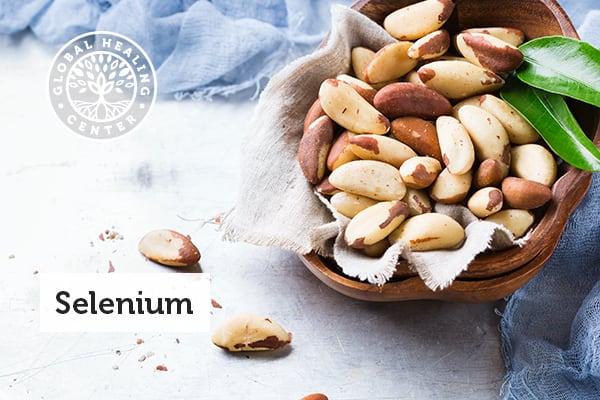
 Selenium (Se) is a trace mineral that supports your body in many ways. It contributes to reproductive health,[1] thyroid health,[2] and helps reduce DNA damage due to its antioxidant nature in certain forms.[3] Nuts, seeds, beans, and some vegetables are rich in selenium, but you can also take this essential micronutrient supplementally when your diet falls short.


 Dr. Eddy Bettermann MD